Free Inquiry #3 – Lemon Tree
I did some research on some early watercolour artists and discussed one below. I also discussed a watercolour artist whom I knew about before this project but quite enjoy the work of.
Who are some prominent watercolour artists? What techniques or styles do they typically use?
Before the 19th century, watercolour was used primarily for painting maps or painting plant species for botanical studies. One of the earliest watercolour artists I could find was Albrecht Dürer; he is known as somewhat the first famous watercolour painter. He is known for his realistic painting “The Young Hare” made in 1502. He made this with small brushstrokes to be able to see individual hairs.
I think my favourite painter/watercolour painter from modern day is Emily Carr. She is best known for her paintings depicting the lives, buildings, and totems of Indigenous peoples in BC. In the past I have done many projects on her work and life. I have recreated one of her paintings called “The Indian Church”.
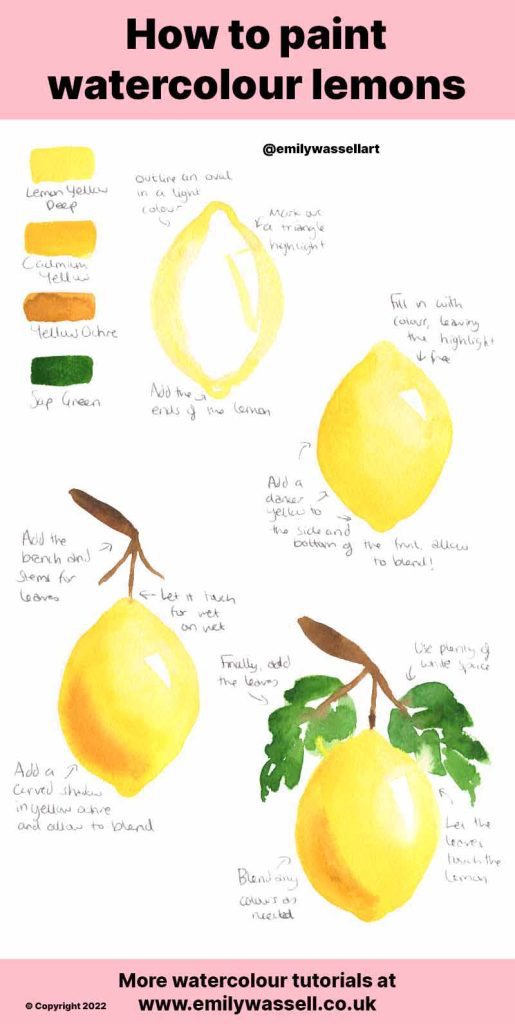
This time I decided to paint a lemon using watercolour. I went on Google to try to find a reference photo because I find it easier to work from a reference. I found this image below on a step by step on how to paint a lemon. The process I started by using light Yellow to draw an oval, then added half-circles at the top and bottom to make the shape. I left out a small triangle to have a highlight. Then, while it was still wet, I added some darker yellow on the edges and around the highlight area. Then I added some brown on the bottom left. Then I ended by added a stem and leaves, then let it dry overnight. In the morning, it had fully dried, and I took a picture of my final product.
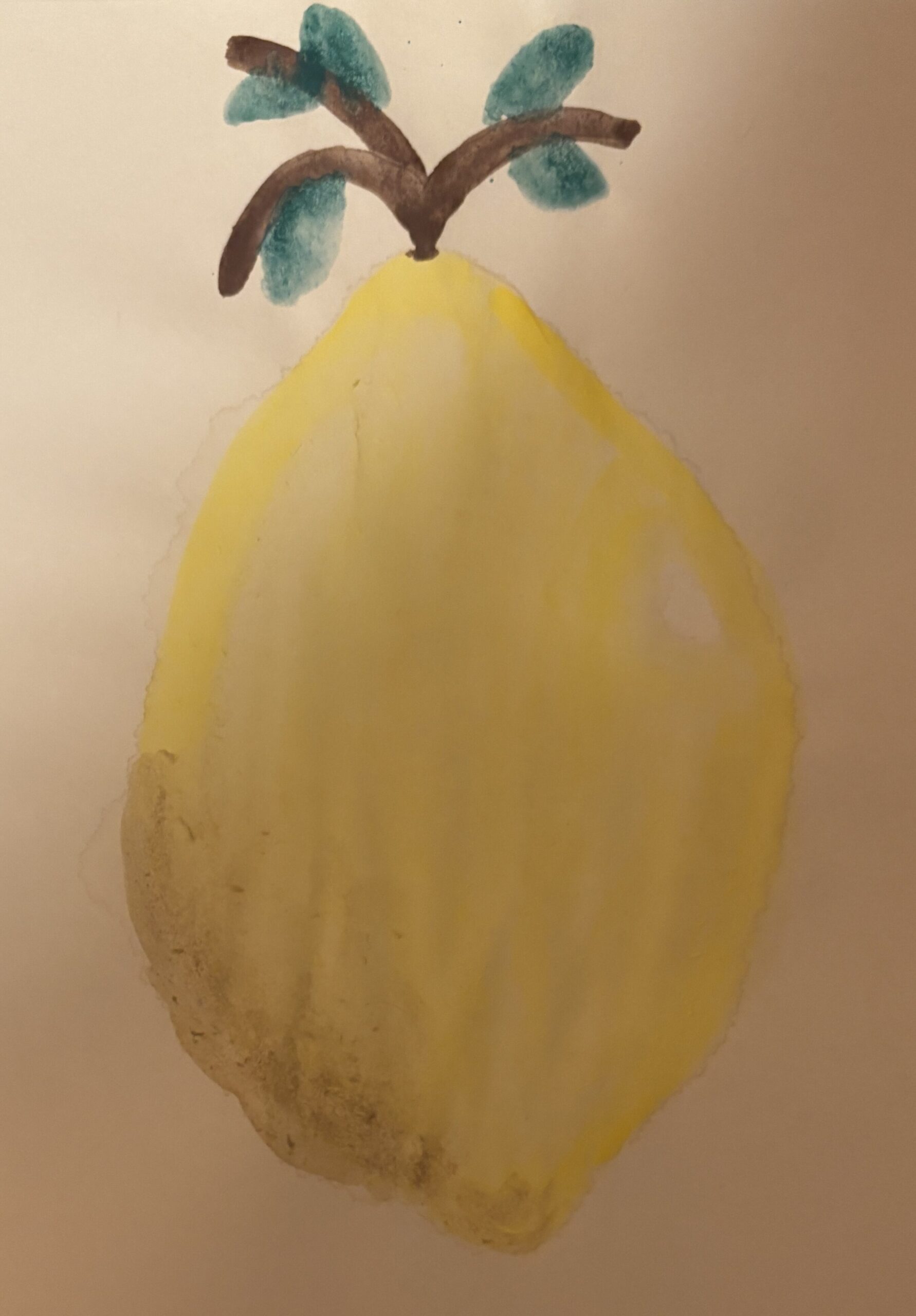
Here’s what I would do differently…
- Use a different type of paper mine started to pill
- I would try using so more fine point brushes to get better detail
- I would use a different colour for the leaves