Free Inquiry Post #2 – My Watercolour Research
When I made my initial post, I posed several questions about watercolour techniques. Below are the answers to some of them and my first watercolour painting.
What are some of the most popular watercolour techniques? How do these techniques differ in Canada vs. Other parts of the world?
As I have discovered, there isn’t a difference between water colour techniques in Canada vs. other parts of the world. Some of the techniques that I researched are Dry Brush, Wet on Wet, Lifting, Salt, Plastic Wrap, Alcohol, Spray & Paint, and Masking Fluid. I think that the first painting technique I want to try is Salt, where you paint using the Wet on Wet technique, then pour salt on it. The salt sucks up some of the paint and creates an interesting texture and image. Source
How are water colour paints made?
Watercolour paints are made with ground pigments, then mixed with a binder, which is commonly gum Arabic, and distilled water; these help to preserve and stabilize the paint. You can make watercolour paints at home; some commonly used binding ingredients are Gum Arabic Solution, Honey, Glycerin, Clove Oil, and Dry Pigment. Source
How does using different types of paper affect your final project?
When discussing watercolour paper, the factors you need to look at are Texture, Quality, and Weight. There are three Textures of water colour paper; the first is Hot Press. It is made by being pressed with hot metal. This paper has a smooth surface and is best for painting detailed subjects like portraits. Next is Cold Press. It is made by being pressed by cold metal. It has a textured surface. This is the most common type of paper used by watercolour artists. Lastly, rough has the most textured surface. This paper is used best for getting a textured look without a lot of fine details. There are two types of quality for watercolour paper. They are Student Grade and Professional Grade. The difference is in how they are made and what they are made of. Lastly is weight. There are three weights of paper: Light – 90lb / 190gsm, Medium – 140lb / 300 gsm, and Heavy – 300lb / 640 gsm. Source
How does using a watercolour pallet vs. Tubes of water colour affect your final product?
The differences between pans (pallets) and tubes are the consistency of the paint. Paint in pans has been dried, meaning that before you use it, you need to add water to rehydrate it. Whereas tubes are a smooth liquid paint that is made to be used immediately. The quality of the two paints is the same, and it comes down to personal preference which type of paint you use. Source
My Salt Watercolour Painting
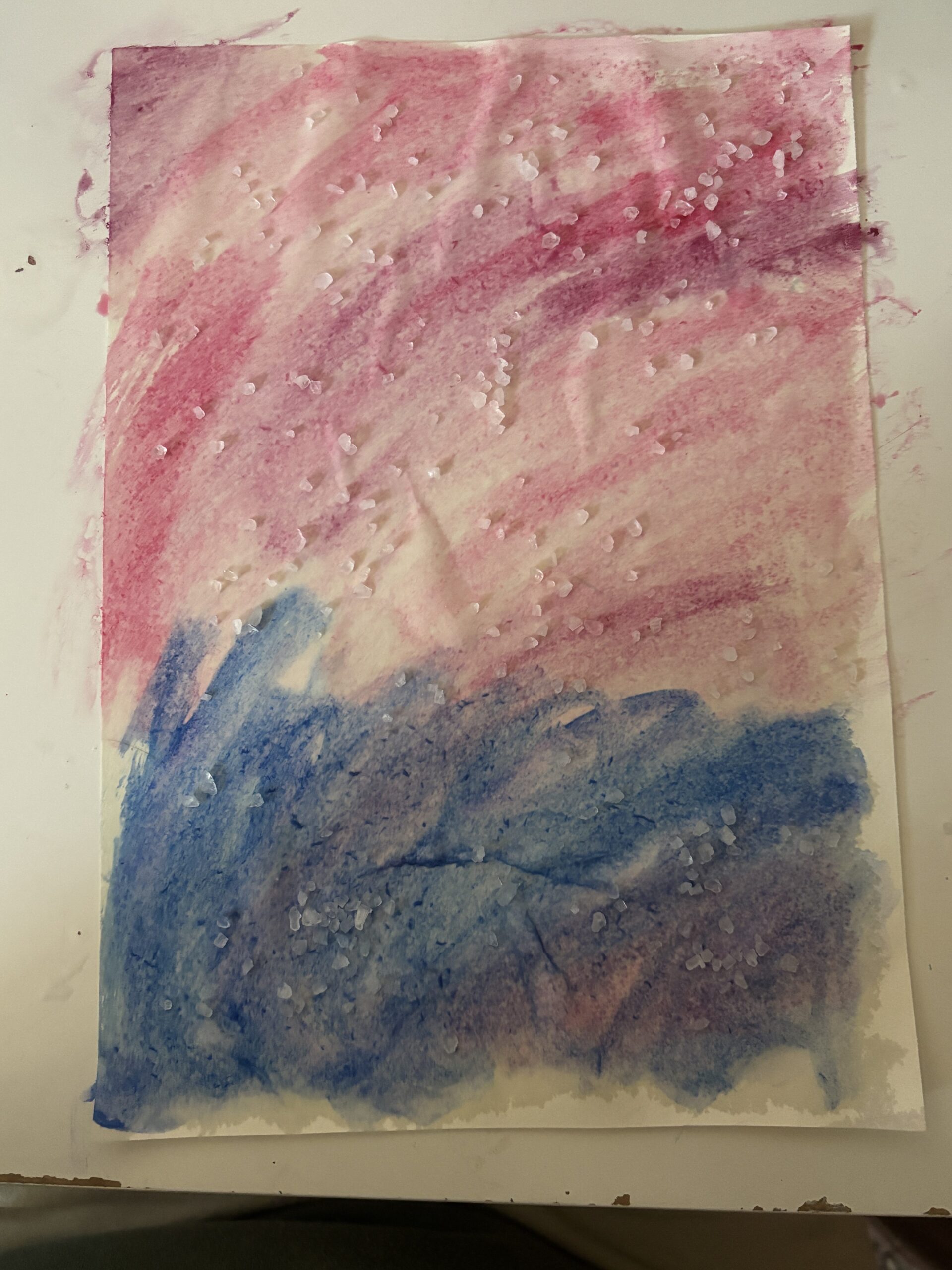
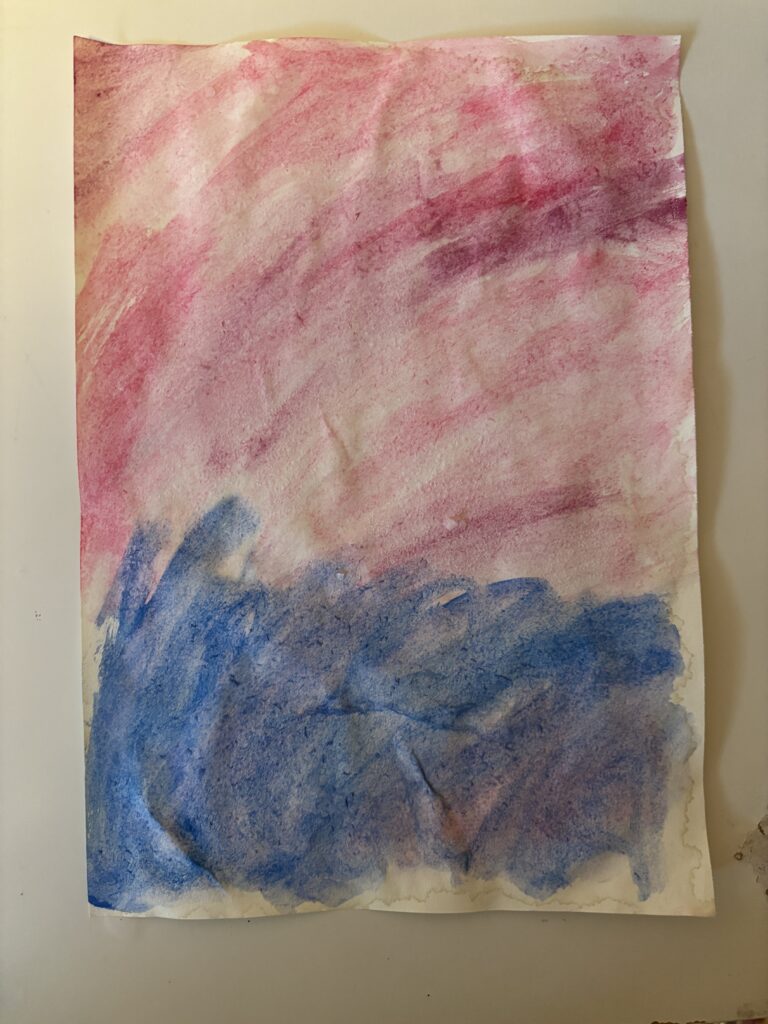
I decided to try using the Salt Watercolour technique. You start by taking your brush or a spray bottle and wetting the whole paper. Then you paint all over with watery paint. Next, you pour salt over it; the salt will dry up the paint and make spots. You should use table salt for small spots and coarse sea salt for big spots. After it dries, you wipe off the salt. I painted using pink, purple, and blue and then dropped coarse sea salt over my painting. I let it dry overnight and wiped off the salt. Unfortunately, it did not work the way I wanted it to. The salt did not suck up the water and I can’t see any spots.
What I would do differently?
- I would use different paper
- I would get the paper more wet
- I would add more salt to have a more noticable difference